This guide has been written for NDIS participants, families, and support coordinators across Brisbane and southeast Queensland who want to understand Supported Independent Living what it is, how it works, what quality looks like, and how to find providers capable of delivering it well. The information here is grounded in NDIA Supported Independent Living guidelines, NDIS Practice Standards, and the practical realities of accessing SIL across Brisbane’s diverse communities. For advice specific to an individual’s plan, SIL eligibility, or upcoming plan review, we recommend consulting a qualified support coordinator or contacting the NDIA directly.
What Supported Independent Living Actually Is
Supported Independent Living is one of the most significant and most frequently misunderstood funding categories within the NDIS. Understanding what SIL actually covers, and what it does not, is the essential starting point for any participant or family exploring this option.
SIL funding pays for the support delivered within a living arrangement the hands-on daily assistance that enables a participant to live as independently as possible. It covers the support worker hours required for personal care, meal preparation, medication management, household tasks, and the other daily living activities that the participant cannot safely manage alone. Critically, SIL funding does not cover the accommodation itself. Rent, utilities, and household costs are paid separately — from the participant’s Disability Support Pension, other income, or through a separate Specialist Disability Accommodation funding stream where the participant is eligible.
SIL is most commonly delivered in shared living arrangements — where two, three, or four participants share a house and a support team. This model has genuine advantages: shared support costs make intensive staffing ratios more financially sustainable, and the social dimension of shared living can provide connection and community for participants who might otherwise be isolated. For the right participant, in the right household, with the right support team, a SIL arrangement can be genuinely transformative.
How SIL Is Funded and Approved in the NDIS
Understanding the SIL funding and approval process is important for participants and families who are considering this support for the first time because the pathway is more complex than for standard Core Supports.
SIL funding is assessed and approved by the NDIA on an individual basis. A participant cannot simply request SIL and have it added to their plan the funding is approved following a detailed assessment of the participant’s support needs, a SIL quote developed by the prospective provider, and a review by the NDIA to confirm that the funding level is appropriate for the participant’s specific needs and the proposed living arrangement.
The SIL quote sometimes called a SIL roster of care must detail every hour of funded support across the week, broken down by shift type, staffing ratio, and support intensity. Developing an accurate SIL quote requires a prospective provider who understands both the participant’s needs and the NDIA’s SIL pricing and assessment requirements. A quote that is poorly structured or that does not adequately reflect the participant’s actual support needs risks being underfunded a situation that affects the quality of support the participant receives every day.
For participants and families across Brisbane who have been navigating this process and researching what experienced SIL providers Brisbane bring to the quoting, assessment, and approval process how they assess participant needs, how they develop SIL quotes that accurately reflect those needs, and how they advocate with the NDIA when funding is insufficient the provider’s experience with the SIL approval pathway is one of the most important evaluation criteria.
What Quality SIL Provision Looks Like
The quality gap between SIL arrangements across Brisbane is significant. The following qualities consistently define SIL providers that deliver excellent participant outcomes:
- Genuine housemate and household matching: The composition of the household who lives together, whose routines and preferences are compatible, what the shared household culture looks and feels like is the single most consequential factor in the SIL experience. Quality providers invest heavily in matching: understanding each participant’s personality, communication style, interests, and support needs before placing them in a household. Ask specifically how the provider approaches this process and what happens if a match does not work.
- Consistent, named support workers: SIL participants benefit enormously from the same familiar faces supporting them day to day. Worker consistency builds trust, enables accurate observation of the participant’s health and wellbeing over time, and creates the household stability that good daily functioning depends on. Ask how the provider builds and maintains consistent worker rosters and how they manage gaps when regular workers are unavailable.
- Participant voice in daily decisions: Within their SIL home, participants have genuine rights to shape daily routines, meal choices, activity planning, and household management. Quality providers actively support participant agency not just in rhetoric but in practice. Ask the provider to give concrete examples of how participants are involved in decisions about their own home.
- Clinical governance for complex needs: For participants with high-intensity personal care requirements, complex behaviour support needs, or medically complex health conditions, the SIL provider must have the clinical infrastructure to support them safely including registered nurse oversight, specialist staff training, and documented escalation protocols. A SIL provider who cannot describe their clinical governance structures clearly is not a safe choice for participants with complex needs.
- Transparent pricing and service agreements: Every SIL arrangement should be governed by a clear service agreement that specifies support hours, staffing ratios, pricing, and participant rights. The SIL funding rate must align with the approved NDIA SIL quote and the NDIS Support Catalogue pricing limits. Providers who are vague about pricing or who present template agreements without participant-specific detail are not operating with appropriate transparency.
The Brisbane SIL Market: What Participants Should Know
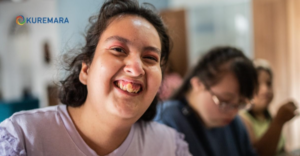
Brisbane’s SIL Brisbane market has developed substantially since the NDIS reached full scheme operation across Queensland. A range of registered providers now offer SIL across the city and its surrounding regions from inner-city arrangements through to outer suburban houses in Logan, Moreton Bay, Redlands, and the growth corridors of the north and south.
The quality variation across Brisbane’s SIL market is real and significant. Participants and families who take the time to evaluate providers carefully visiting prospective houses, speaking with current residents or their families, and asking the operational questions that reveal actual quality consistently make better decisions than those who select based on availability or convenience alone.
For participants and families who have been conducting careful research and evaluating what genuinely capable supported independent living Brisbane providers bring to the full spectrum of SIL quality from household matching and worker consistency through to clinical governance and NDIA advocacy the evaluation framework above provides the most reliable basis for distinguishing providers worth trusting from those who do not meet the standard.
SIL and NDIS Support Across Brisbane
For participants and families across Brisbane and southeast Queensland looking for a registered NDIS provider with genuine SIL expertise and authentic person-centred practice, Kuremara is a trusted and experienced partner.
Kuremara delivers Supported Independent Living, Individualised Living Options, Short-Term Accommodation, In-Home Support, Community Access, Community Nursing Care, Mental Health Care, Support Coordination, and Disability Transport Services across Brisbane and the broader southeast Queensland region. Their SIL approach is grounded in genuine household matching, consistent worker rostering, and active support of participant voice within the home because they understand that a SIL arrangement is not just a funded support. It is where the participant lives, and it deserves to reflect who they are.
For participants with complex support needs, Kuremara’s clinical governance structures ensure quality and safety are never compromised. For participants exploring ILO as an alternative to standard SIL, their co-design capability opens up genuinely personalised living arrangements.
SIL Done Well Changes Everything
For the right participant, in the right household, with the right support team and the right provider, Supported Independent Living does exactly what it promises it enables a person to live independently, with dignity, in a home that genuinely feels like theirs. That outcome is available in Brisbane. Finding it requires careful evaluation, specific questions, and the willingness to hold out for a provider whose quality matches that ambition.